Marked on the older maps is a Brick Field (site of) adjacent to the Middlesbrough and Guisborough branch railway. The 1853 map also shows ‘Brick and Tile Works’ adjacent to Howl Beck Mill and Tockets Mill.
The difference between a ‘Brick Field’ and a ‘Brick and Tile Works’ is not clear. The 1893 map shows an outline of the Brick Field but it is not marked as such. This suggests the Brick Field fell into disuse sometime between 1853 and 1893.
The Guisborough Forest have a ‘trim trail’ that takes the enthusiastic runners through the site of the Brick Field. At one time there was evidence of bricks but a lot have now been covered in moss and other forest debris.
Information is available by fhithich on this site but it doesn’t go into a lot of detail about the Brick Field itself. Further info from Mick Garret is also worth looking at. (Is fhithich and Mick Garret one and the same?)
I have wondered where the clay came from, as I imagined it would be local. Bricks were hand made from clay or shale. As the area has a lot of shale it is more likely this was used. The bricks were allowed to dry in the sunshine (although not a lot of good, drying weather would have occurred in Bousdale?). To make bricks from shale, or clay, the shale or, which is a mixture of clay sand and other rocks, has to be made fairly fine so it can be mixed with water, made into a paste and moulded. Using shale at Bousdale would require the material to be ground. (The maps showing the Brick and Tile Works at Tockets indicate a kiln, so those bricks were fired. Was there a kiln at Bousdale?)
The site is on an incline so making the bricks and laying them out to dry, if that was the method, must have been difficult and the drying would have been a long time, in poor weather. It has also been suggested that firing the bricks, or at least drying them out, was achieved by stacking them in brushwood clamps and firing them that way?
Manufacture of bricks by this method goes back to the Romans. Benfield Community Post gives a good description of the process. The shale and clay may have been excavated from the area where the ponds are, through the tunnel that goes under the route of the railway. Although a method of grinding the shale and clay to a fine paste would be required. Was that necessary here?
Possibly no, as the shale and clay could be washed and allowed to settle so larger stones would settle out leaving a clafile silt (clay) in the water. By seiving this material it could be cleaned and the clay extracted. It was a long process and finally the clay, moulded into the required shape, could be fired. Depending on the source of the silt different properties resulted. Som firing caused vitrification of the clays and a glassy apppearence to the final product.
The indication it was a Brick Field, rather than a Brick Works, might suggest this was a convenient spot to store bricks delivered by railway. In Victorian times brickworks became mechanised and the demand for building bricks was high. Hence getting bricks from larger deposits and transporting them in was more economical. It has been suggested the bricks were used to build Hutton Village, which is some distance away, and Hutton Village miners cottages are not built of pale coloured bricks? If the bricks were imported by rail, this wouldn’t have occurerd before 1825, the start of the S&D railway. The brick Field may have been used to make bricks and fire them in clamps for small local use.
Walking through the area of the Brick Field the remains of a sandstone building is evident,although it is not clear if this was actually part of the Brick Field, although fhithich suggests it may have been.
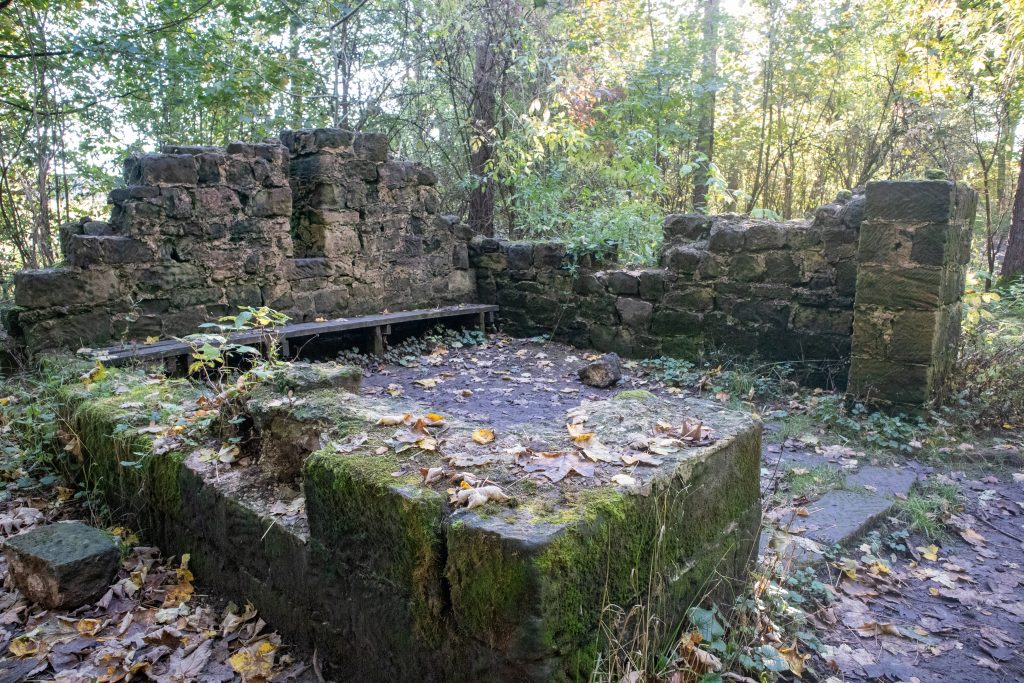
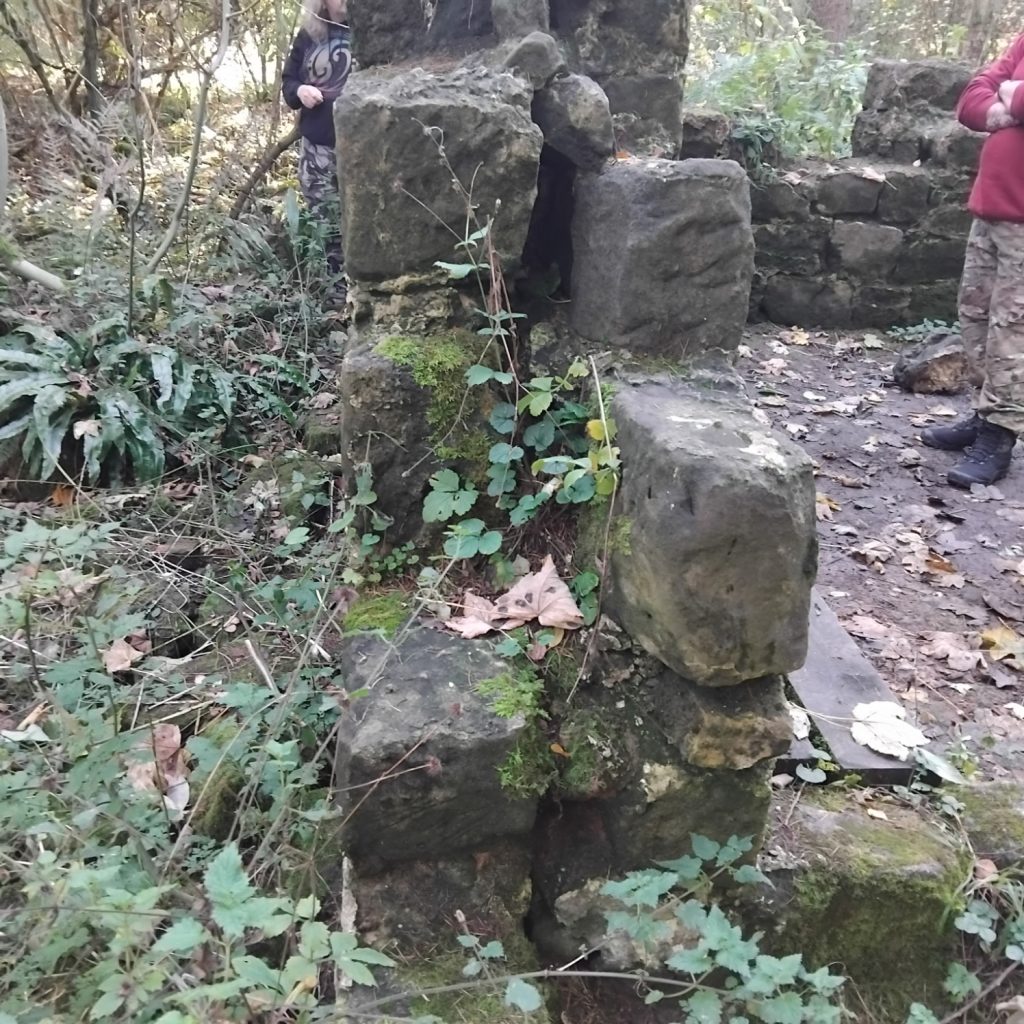
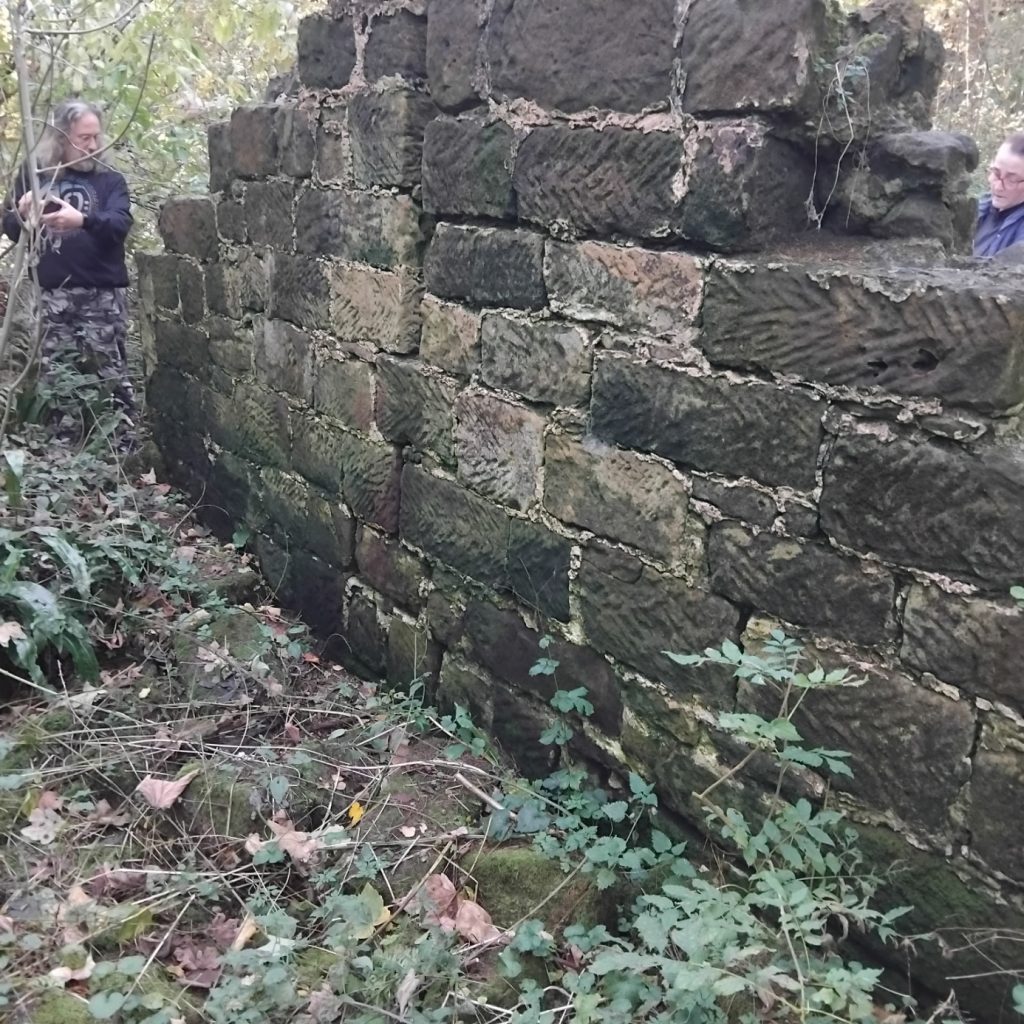
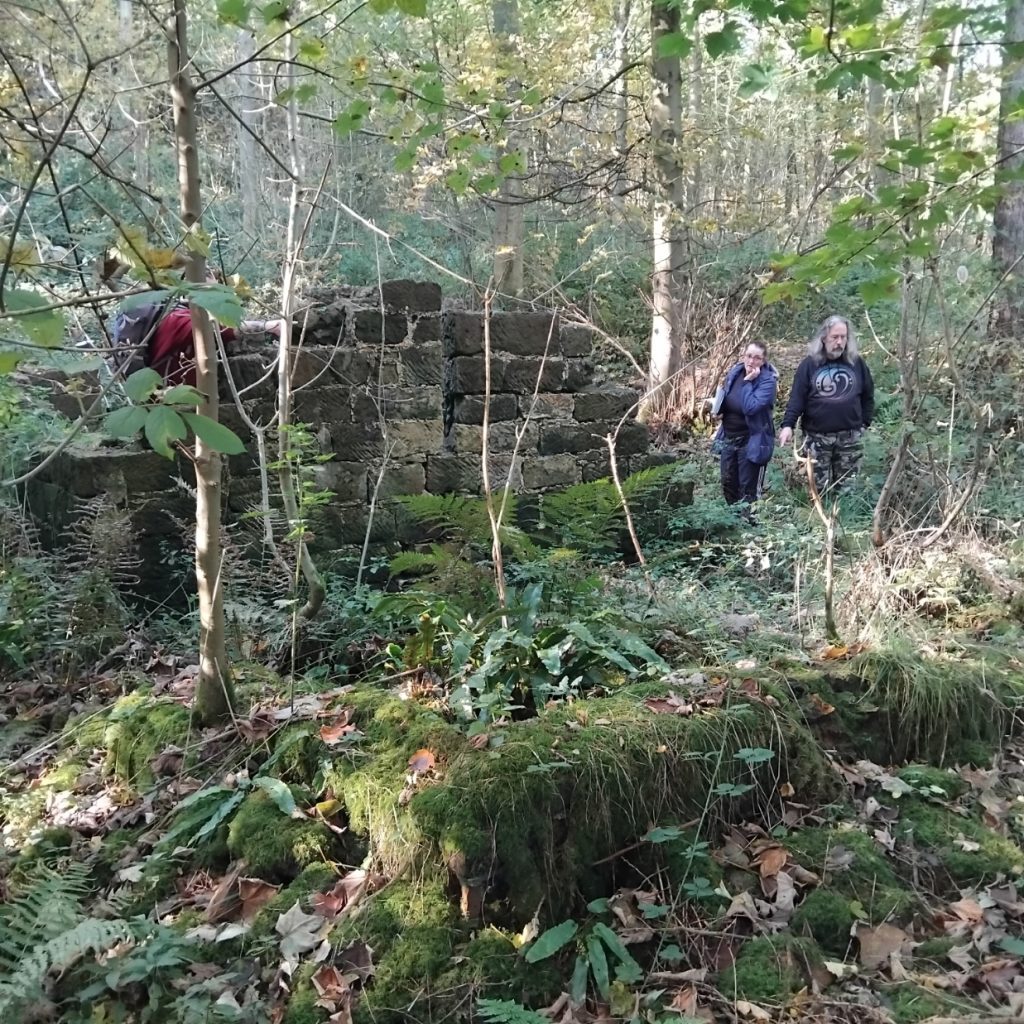
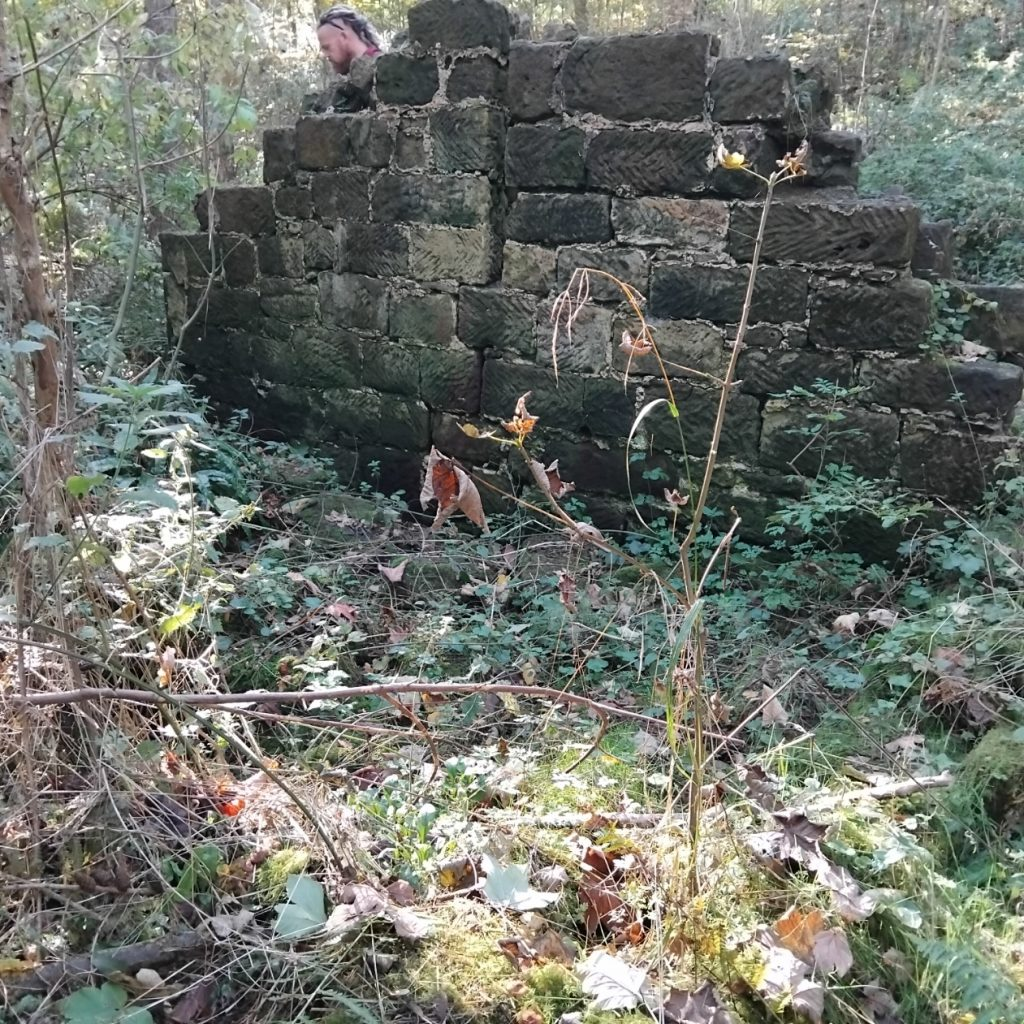
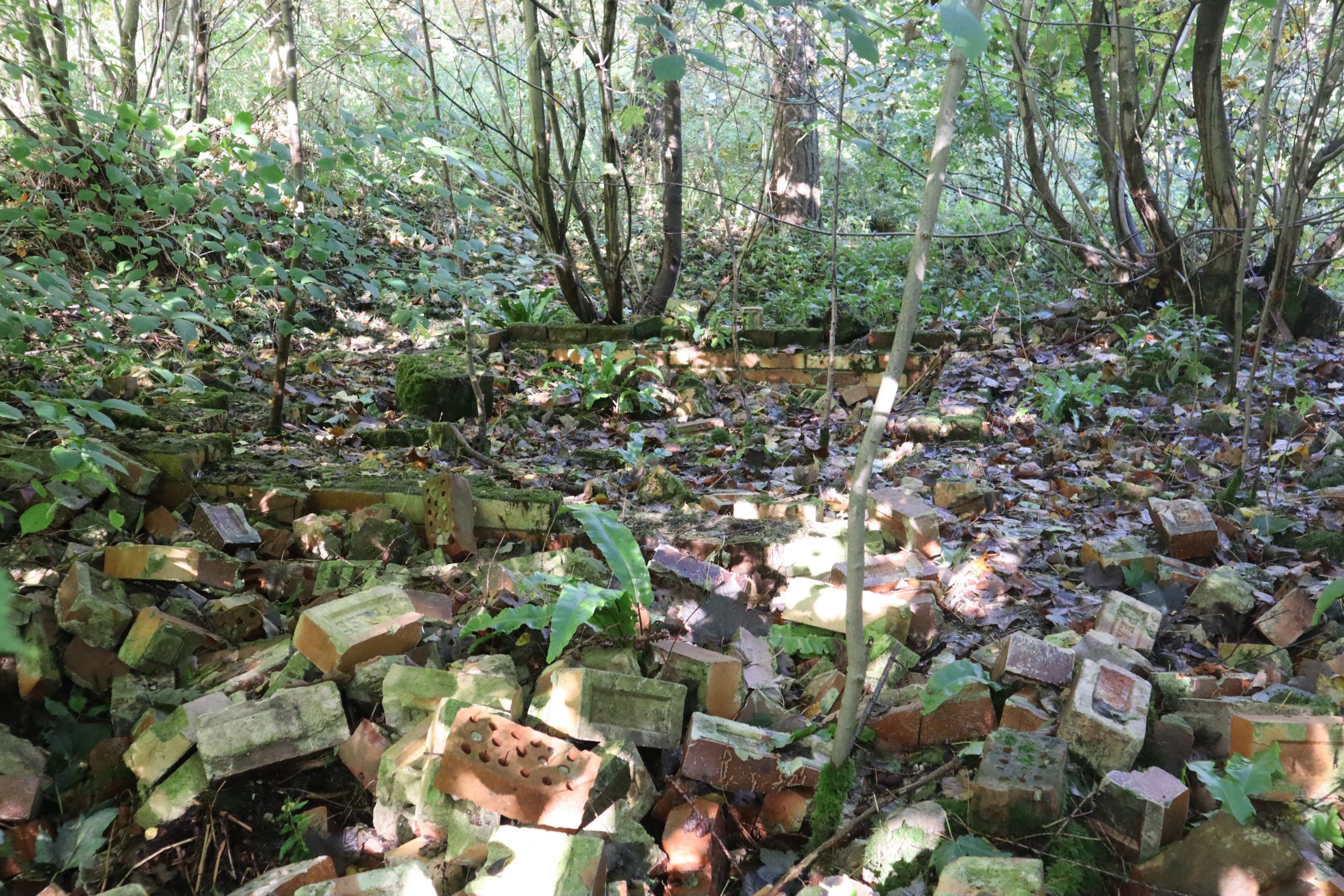
and some brick built structures
.
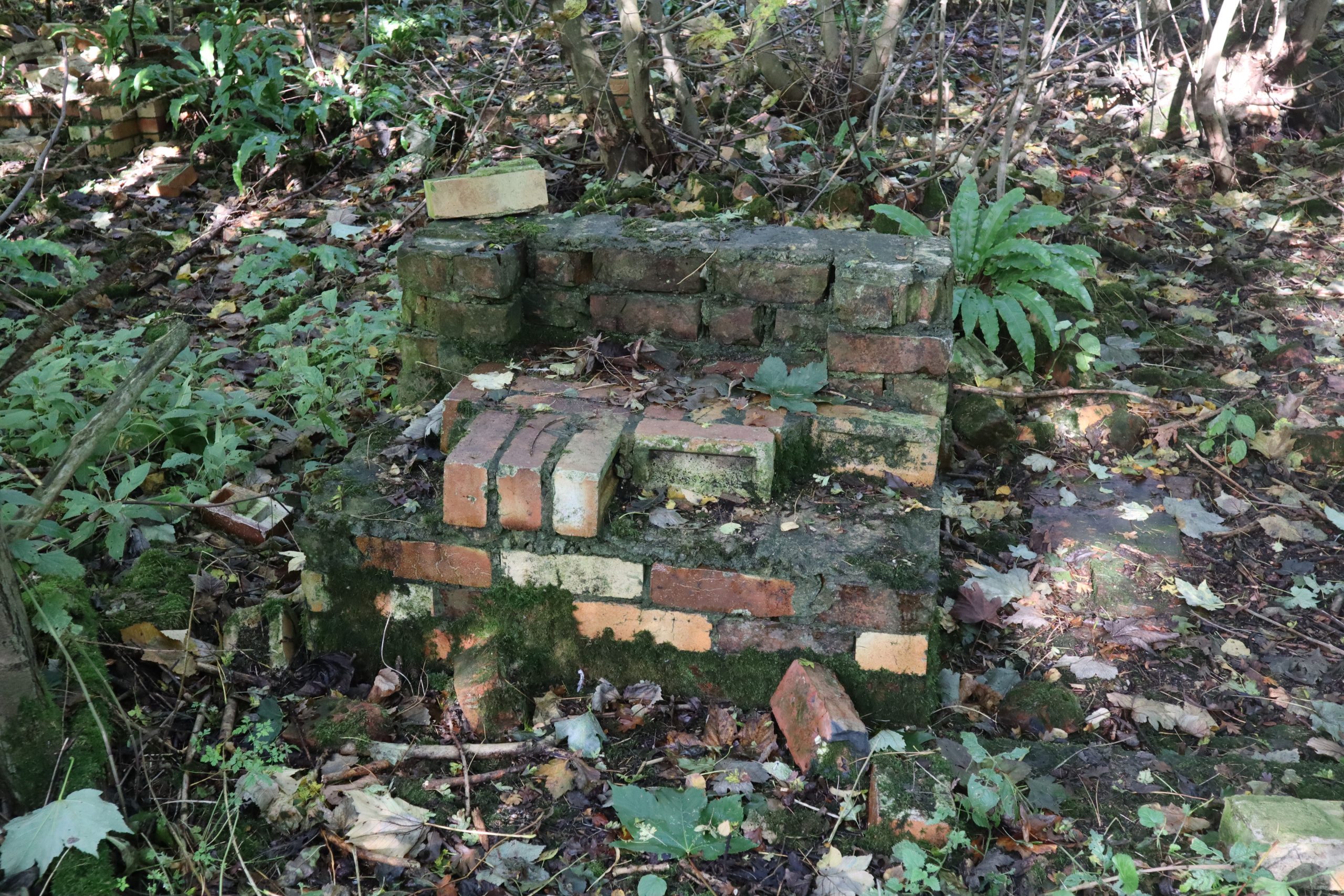
The frogs of some of the bricks are marked PEASE and 1867. This suggests they were made at a Brick works owned by the Pease family.
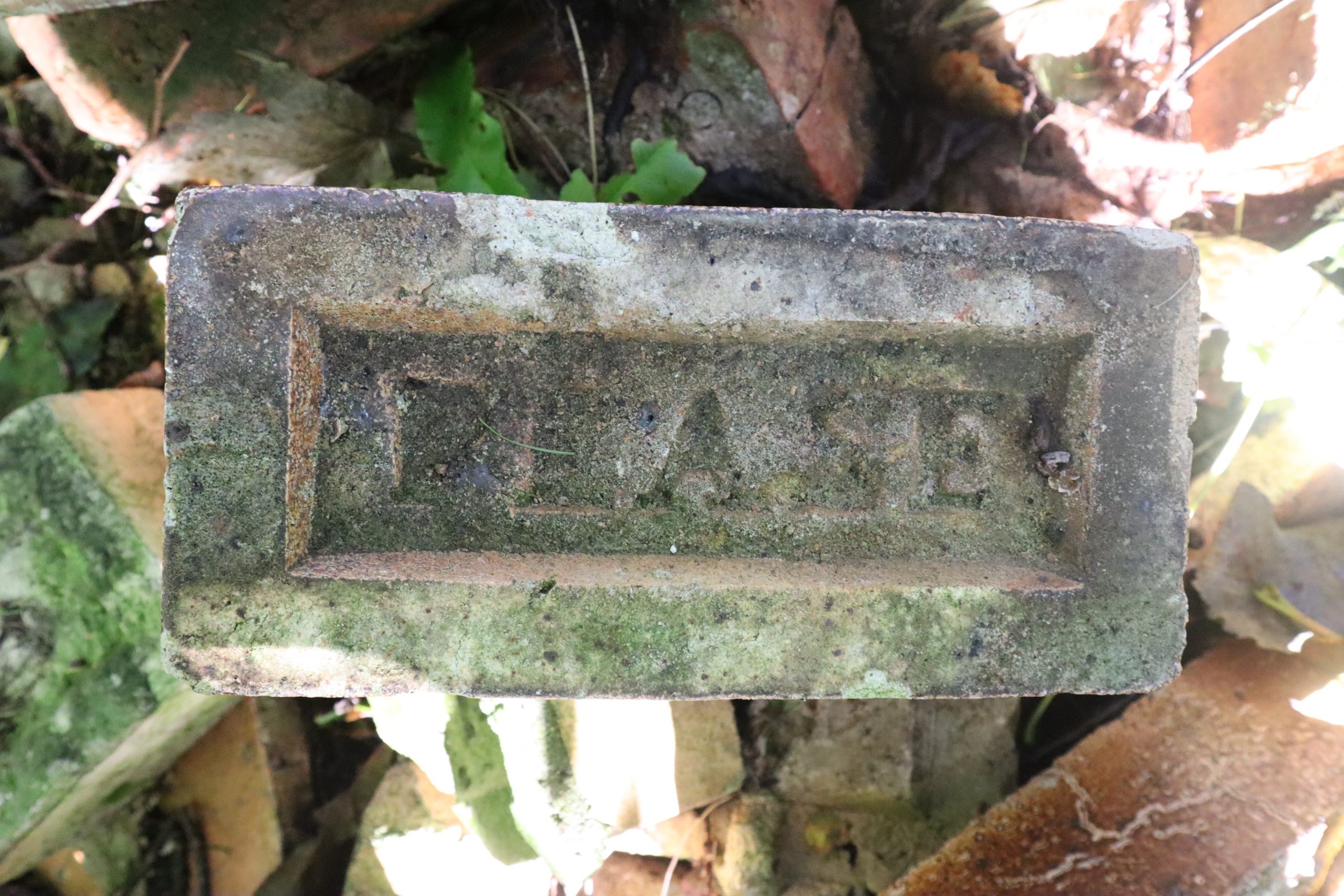
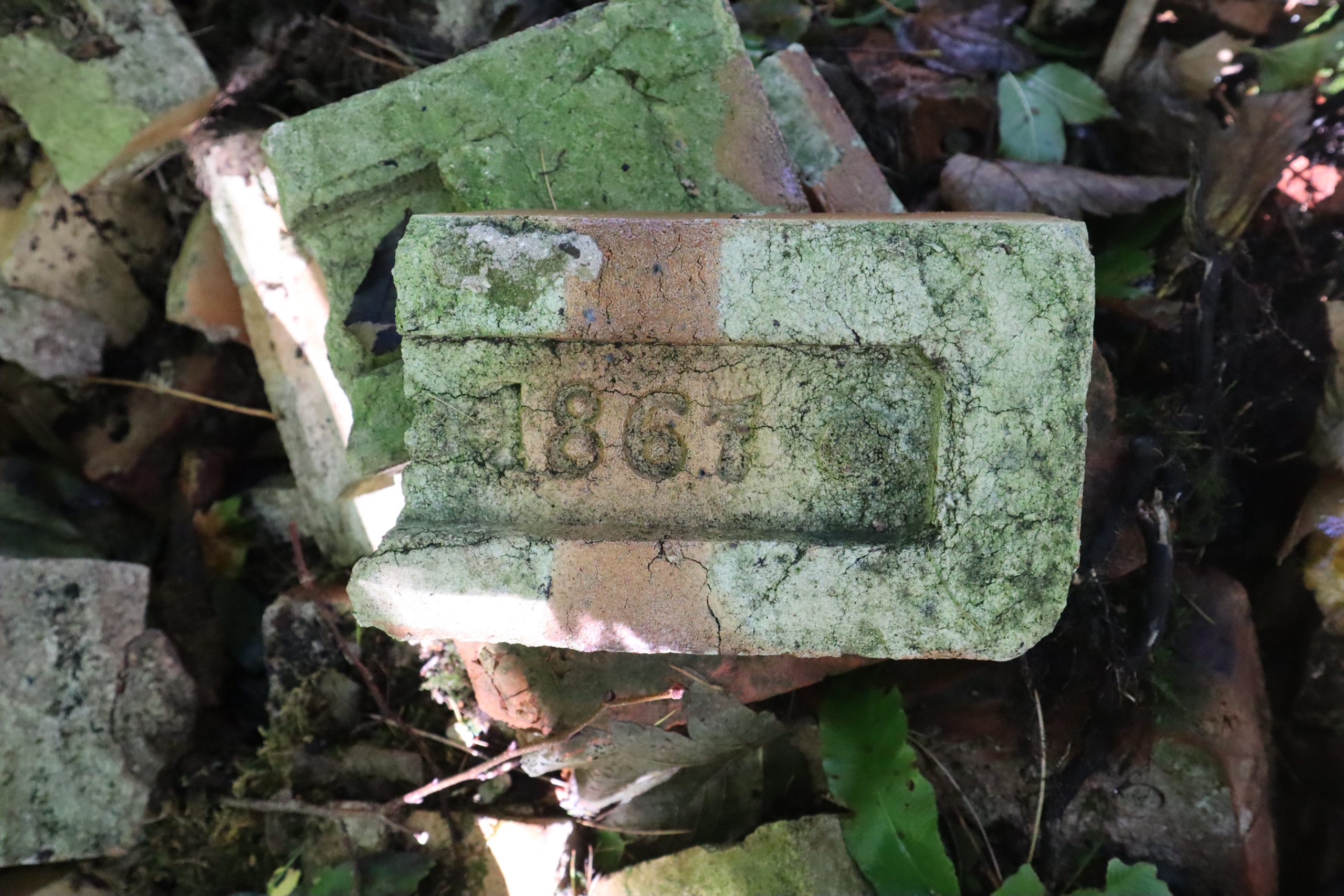
Scoria Bricks cites: “….seen throughout Darlington, West Co. Durham and Teesside is the ‘Pease Brick’ – a soapy white semi-glazed brick produced in the brickworks that were set alongside the Pease family pits in places like Brancepeth, Billy Row, Roddymoor and Waterhouse and centred on the Deerness Valley. ” (The Deerness Valley is in Durham north of Crook.) Assuming the bricks came from Pease’s own brick works this must have been more economical than buying local bricks. But why store them at this site instead of closer to Hutton Village, where they were purported to be used, is still a mystery.
Who owned the brick and tile works at Howl Beck Mill and Tockets Mill?